Vous êtes perdu face aux maisons conteneurs pliables ? Vous voyez les modèles « en Z » et « traditionnels », mais ils semblent similaires. Faire le mauvais choix pourrait vous laisser avec une habitation mal isolée et peu durable.
LeType Zest une mise à niveau moderne avec un aspect épuré, mieuxisolation, supérieurétanchéitéet une durée de vie bien plus longue.maison pliable traditionnelleIl s'agit d'un modèle plus ancien avec des charnières visibles, des performances moindres et une durée de vie plus courte.
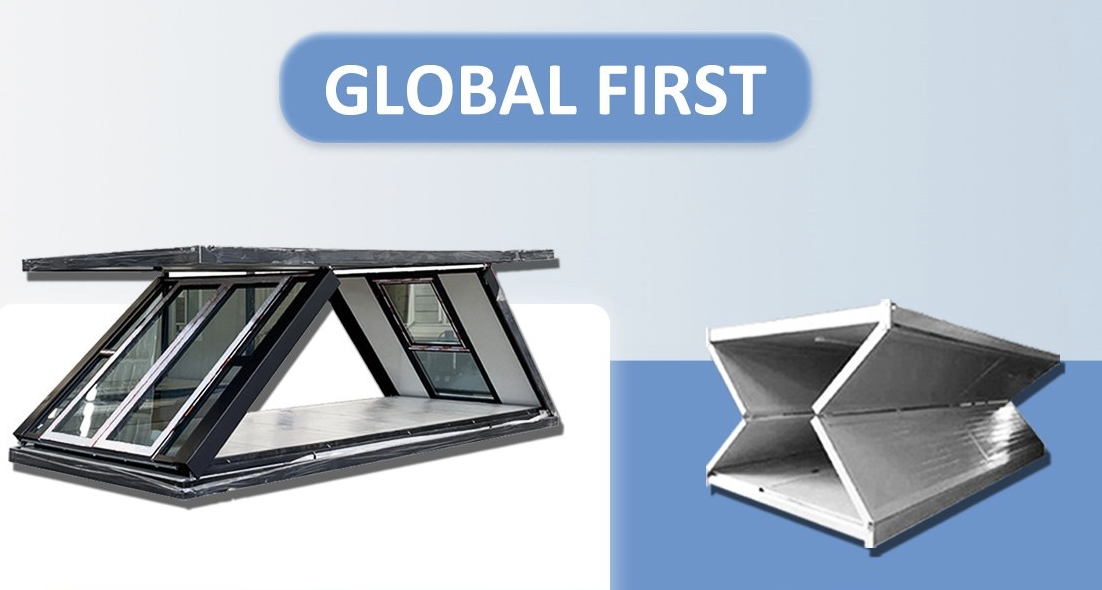
En tant que premier fabricant mondial de maisons conteneurs de type Z, nous connaissons parfaitement tous les détails qui distinguent ces deux produits. Il ne s'agit pas simplement d'un nouveau nom ; c'est une approche totalement différente.construction modulaireNous avons conçu le modèle Z pour résoudre les problèmes rencontrés sur les modèles précédents. Analysons ensemble les principales différences afin que vous compreniez pourquoi cette nouvelle conception révolutionne le secteur pour les maîtres d'ouvrage, les importateurs et les exploitants de camps. Nous examinerons chaque point en détail pour vous aider à prendre une décision éclairée pour votre prochain projet.
En quoi le style de la Z-Type se compare-t-il à celui du modèle traditionnel ?
Craignez-vous que votre bâtiment modulaire paraisse bon marché ou démodé ? Un design vieillot avec des éléments de quincaillerie apparents peut nuire à l’esthétique de l’ensemble de votre projet et décevoir vos clients.
Le modèle Z-Type est une toute nouvelle conception modulaire 2024 au design élégant et moderne. Le modèle traditionnel, quant à lui, est d'un style plus ancien, avec des charnières apparentes disgracieuses qui lui donnent un aspect vieillot et industriel.
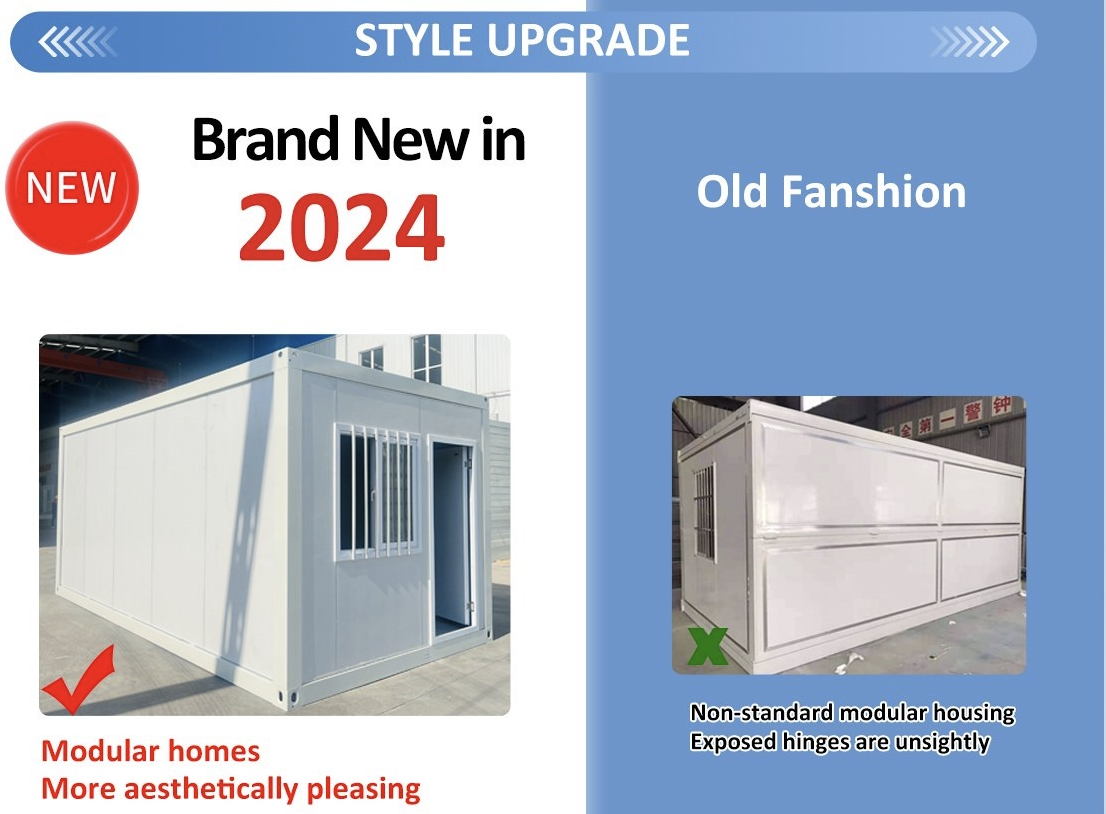
Lors du développement du Z-Type, notre objectif principal était d'embellir l'esthétique des bâtiments pliables. Nous souhaitions créer un espace qui ressemble à une maison modulaire haut de gamme et permanente, et non à un conteneur temporaire. Le changement majeur a consisté à supprimer les charnières apparentes présentes sur tous les modèles traditionnels. Ces charnières donnent instantanément un aspect industriel et peu soigné au bâtiment. Le Z-Type arbore des lignes épurées et une finition lisse qui s'intègrent parfaitement dans des environnements modernes tels que les hôtels de charme, les campings de villégiature ou les espaces commerciaux élégants. Pour nos clients B2B, cette amélioration esthétique est un atout considérable. Elle leur permet de proposer un produit plus haut de gamme à leurs clients finaux, de pratiquer des prix plus élevés et de valoriser leur image de marque. La différence est immédiatement perceptible.
| Fonctionnalité | Maison conteneur de type Z | Maison pliable traditionnelle |
|---|
| Année de conception | Tout nouveau 2024 | Vieille mode |
| Apparence | Un aspect modulaire esthétiquement plaisant | Aspect industriel non conventionnel |
| Charnières | Caché à la vue | Exposé et disgracieux |
| Impression | Moderne et haut de gamme | Daté et temporaire |
Qu'est-ce qui rend la Z-Type plus esthétique et plus performante ?
Vos projets exigent-ils une excellente isolation et une esthétique soignée ? Les modules pliables traditionnels, avec leurs nombreuses coutures, sont souvent décevants, entraînant des courants d’air et des factures d’énergie élevées.
Le type Z utilise des éléments entiers,panneaux muraux sans jointpour un aspect net et une qualité supérieureétanchéité à l'airLes modèles traditionnels utilisent deux panneaux muraux distincts reliés par des charnières, ce qui crée des interstices, des fuites et une mauvaise isolation.
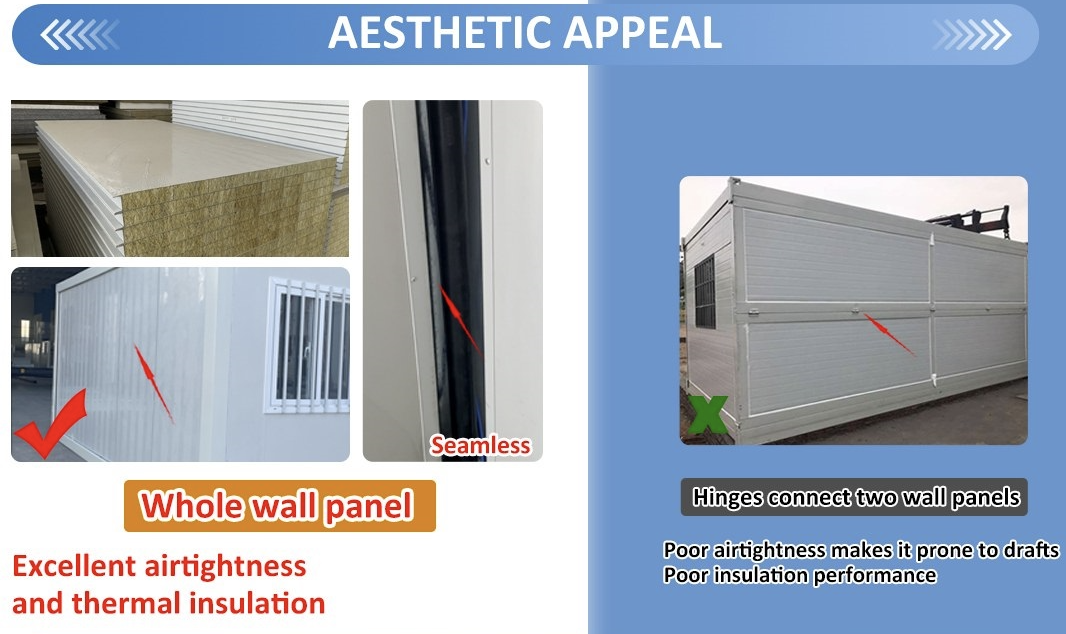
Le secret des performances supérieures du modèle Z réside dans la structure de sa paroi. Nous l'avons conçue avec un panneau mural unique et continu. Ce choix de conception présente un double avantage. Premièrement, il crée l'esthétique moderne et épurée dont nous parlions. Aucune rupture ni charnière disgracieuse ne vient perturber la façade. Deuxièmement, et surtout, il améliore considérablement les performances. Une paroi pleine ne présente aucun point faible. Cela garantit une excellente étanchéité à l'air, bloquant les courants d'air et les fuites d'air. Il en résulte une meilleure isolation thermique, assurant un confort optimal à l'intérieur tout en réduisant les coûts de chauffage et de climatisation. À l'inverse, le modèle traditionnel assemble deux panneaux muraux plus petits par une charnière centrale. Cette charnière constitue un point faible majeur en matière d'étanchéité à l'air. Elle crée un joint très sensible aux courants d'air et aux pertes d'énergie, ce qui rend l'appareil moins confortable et plus coûteux à utiliser.
Le modèle en Z est-il plus efficace pour empêcher l'eau et l'air de pénétrer ?
Craignez-vous que des fuites d'eau n'endommagent votre investissement ? Un bâtiment sans système d'étanchéité adéquat…système de drainageCela représente un risque important, surtout dans les climats pluvieux, pouvant entraîner des moisissures, de la rouille et des réparations coûteuses.
Oui, le modèle Z est équipé d'un système de drainage intégré pour une gestion optimale de l'eau et une étanchéité parfaite. Le modèle traditionnel, quant à lui, ne possède pas de système de drainage et repose sur une vidange automatique, ce qui est peu fiable.
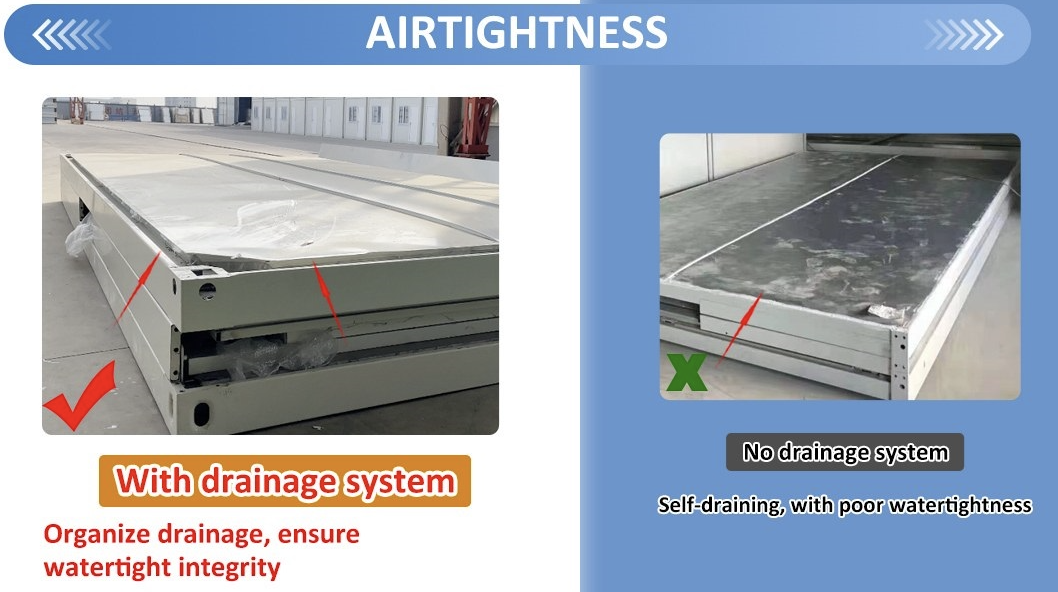
L'eau est l'ennemie de tout bâtiment, et c'est là que le modèle Z excelle. Nous avons intégré un système de drainage complet directement dans la structure. Ce système collecte activement l'eau de pluie du toit et l'évacue du bâtiment de manière organisée. Cela garantit une étanchéité parfaite, même lors de fortes averses. Pour nos clients qui construisent des projets hôteliers ou résidentiels dans des régions humides, cette caractéristique est essentielle. Elle protège leur investissement et prévient les désagréments liés aux dégâts d'eau, à la rouille et aux moisissures.maison pliable traditionnelleCe modèle ne possède pas de système de drainage adéquat. Il repose sur un système d'« auto-drainage », ce qui signifie que l'eau s'écoule simplement où elle le peut. Cela entraîne souvent une accumulation d'eau au niveau des joints et des cadres de fenêtres, provoquant à terme des fuites. L'absence d'un système de drainage approprié constitue l'un des principaux défauts de ce modèle ancien et explique en grande partie sa durée de vie plus courte.
Lequel offre un espace de vie plus confortable ?
Vous souhaitez un espace intérieur ouvert et accueillant ? Une pièce exiguë, sombre et étouffante représente un inconvénient majeur, quel que soit son usage : maison, bureau ou chambre d’hôtes.
Le modèle Z est conçu pour être spacieux, lumineux et bien ventilé, créant ainsi un environnement intérieur confortable. Le modèle traditionnel donne souvent une impression d'étroitesse, avec une mauvaise aération et un éclairage naturel insuffisant.
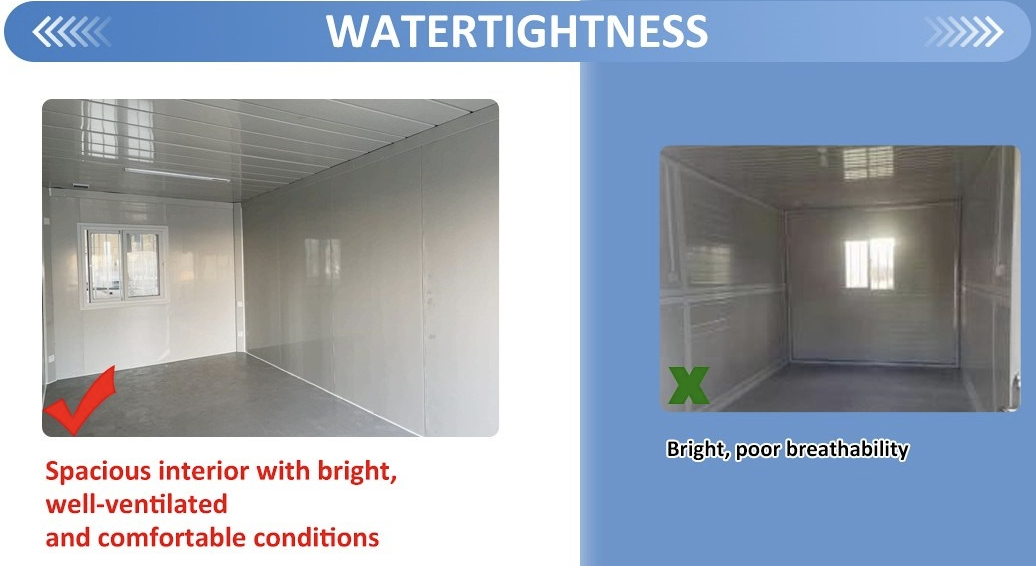
L'expérience intérieure est tout aussi importante que l'esthétique extérieure. Nous avons conçu la structure de la Z-Type pour optimiser l'espace et le confort intérieurs.intégrité structurelleCe modèle permet d'intégrer de plus grandes fenêtres et d'aménager des espaces plus ouverts sans compromettre la solidité. Il en résulte un espace de vie ou de travail baigné de lumière naturelle, lumineux et aéré. Une bonne ventilation était également une priorité, afin de garantir un air frais et d'éviter la sensation d'étouffement souvent présente dans les petits espaces. Pour les exploitants de maisons d'hôtes ou de complexes hôteliers, le confort des clients est primordial. Le modèle Z offre une expérience supérieure, donnant l'impression d'être dans une chambre permanente plutôt que dans un espace temporaire. À l'inverse, les contraintes structurelles des maisons pliables traditionnelles engendrent souvent un intérieur plus exigu et étouffant. Les fenêtres plus petites et la circulation d'air moins efficace peuvent rendre l'espace sombre et confiné, ce qui n'est pas idéal pour une occupation à long terme ou pour l'hôtellerie haut de gamme.
Quelles sont les principales différences structurelles ?
Vous recherchez une structure stable, sécurisée et facile à monter ? Un système structurel obsolète peut être moins stable, plus difficile à plier et moins fiable à long terme.
Le modèle en Z utilise un système intégré de poutres et de colonnes à rouleaux de pointe et une méthode de pliage intégral. Le modèle traditionnel utilise un système de colonnes tubulaires carrées plus ancien et une méthode de pliage en « taille ».
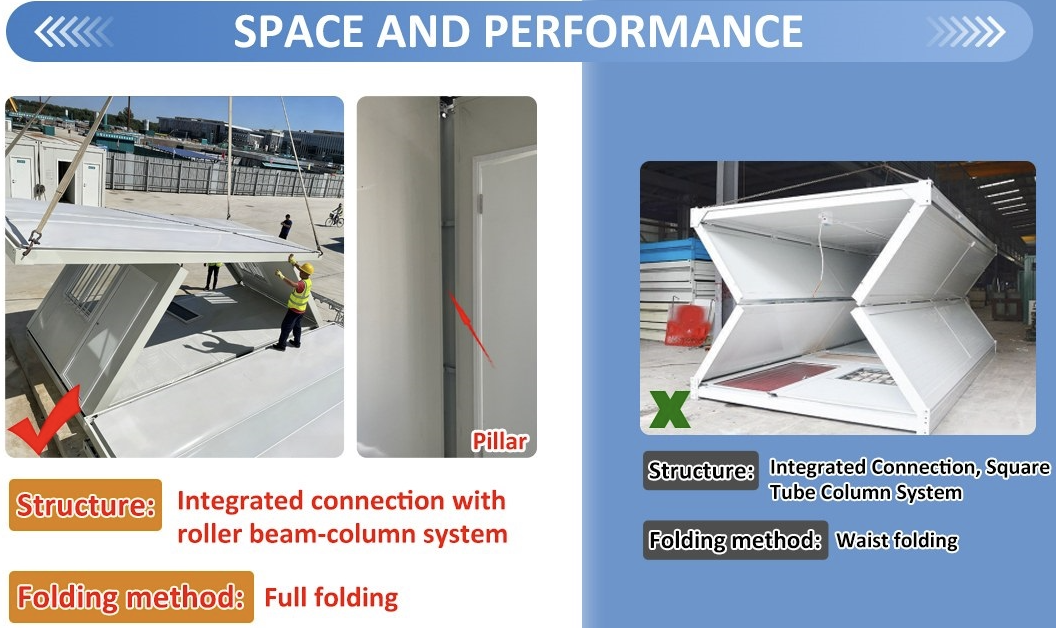
C'est un peu technique, mais c'est l'une des améliorations les plus importantes. La structure du Z-Type est construite avec un système de connexion intégré utilisant une conception à poutres et colonnes à rouleaux. Cette structure moderne est non seulement plus robuste, mais elle permet également un pliage complet. L'ensemble se replie de manière fluide et efficace, presque comme un accordéon. Cela accélère l'installation et réduit l'usure des composants pendant le transport et le montage. Le modèle traditionnel utilise une structure plus ancienne et plus simple : un système de colonnes tubulaires carrées à connexion intégrée. Son système de pliage, dit « pliage en taille », consiste à replier les parois vers l'intérieur au niveau de la charnière centrale. Ce système sollicite davantage les charnières et le cadre, est moins stable dans le temps et plus fragile en cas d'utilisation répétée. La mise à niveau de la structure du Z-Type a constitué un changement fondamental visant à améliorer la stabilité, la durabilité et la facilité d'utilisation pour nos clients.
| Fonctionnalité | Maison conteneur de type Z | Maison pliable traditionnelle |
|---|
| Structure | Système intégré poutre-colonne à rouleaux | Système de colonne à tubes carrés intégré |
| Méthode de pliage | Pliage complet | Pliage de la taille |
| Avantage | Fonctionnement plus stable et plus fluide | Méthode plus ancienne et moins robuste |
Combien de temps peut-on encore espérer qu'une maison de type Z dure ?
Avez-vous besoin d'un retour sur investissement ? Un bâtiment qui ne dure que quelques années est un mauvais choix pour tout projet sérieux, vous obligeant à le remplacer bien trop tôt.
La maison conteneur de type Z a une durée de vie prévue de 15 ans. La maison pliable traditionnelle ne dure généralement que 5 à 8 ans, soit moins de la moitié du temps.
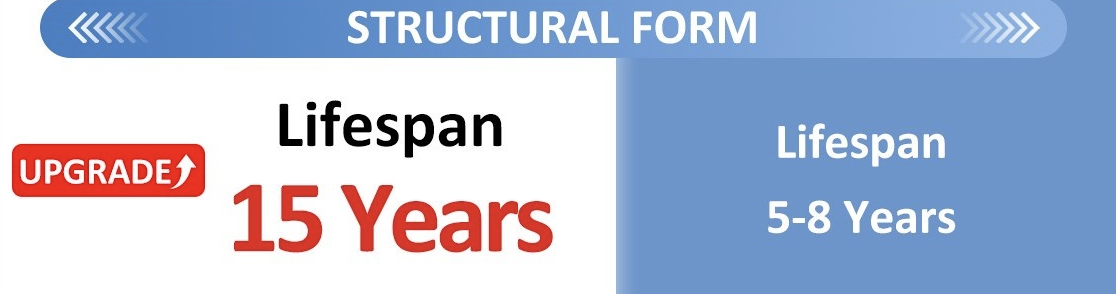
La durée de vie est un facteur crucial pour tout acheteur B2B, qu'il s'agisse d'un entrepreneur général ou d'un exploitant de camp. Elle influe directement sur votre retour sur investissement. Le modèle Z est conçu pour durer. Grâce à sa structure supérieure, son étanchéité améliorée grâce au système de drainage et ses composants plus résistants, nous l'avons conçu pour une durée de vie de 15 ans. Cela en fait un atout fiable et pérenne pour votre entreprise. Vous pouvez construire en toute confiance un complexe hôtelier, un parc de bureaux isolé ou un village commercial, sachant que les structures resteront robustes pendant plus d'une décennie. Le modèle traditionnel ne peut tout simplement pas rivaliser. Ses faiblesses – les charnières exposées qui rouillent, la mauvaise étanchéité qui entraîne des dommages et la structure moins robuste – contribuent toutes à une durée de vie beaucoup plus courte, de seulement 5 à 8 ans. Pour tout projet d'envergure, choisir un bâtiment qui dure deux fois plus longtemps est la seule décision financière logique.
Quel modèle est le mieux adapté aux déménagements fréquents ?
Votre projet nécessite-t-il des bâtiments déplaçables et réutilisables ? Une structure qui ne supporte pas les pliages et dépliages répétés se détériorera rapidement, entraînant un gaspillage d’argent.
Le modèle Z est conçu pour un usage répété et peut être plié plus de 100 fois. Le modèle traditionnel est beaucoup moins durable, ne supportant que moins de 50 pliages avant de présenter des signes d'usure importants.
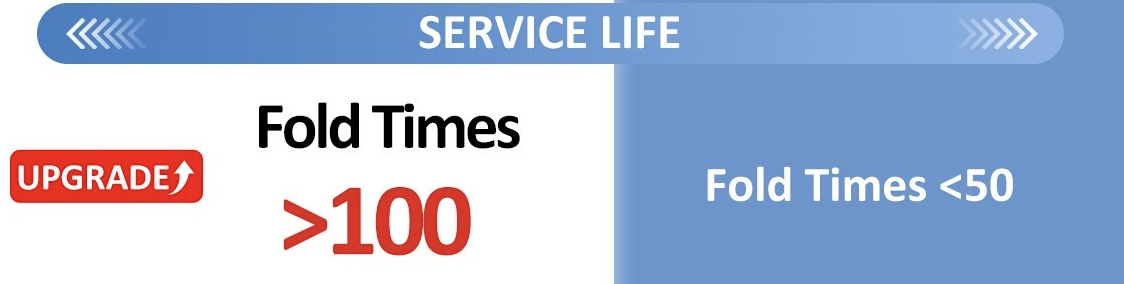
Pour nombre de nos clients, comme les entreprises de construction ayant besoin de bureaux de chantier temporaires ou les organisateurs d'événements ayant besoin de boutiques éphémères,réutilisabilitéC'est essentiel. On ne se contente pas d'installer un bâtiment une seule fois ; on le déplace d'un projet à l'autre. Nous avons conçu le modèle Z en tenant compte de ce besoin. Son mécanisme de pliage complet et robuste, ainsi que sa structure renforcée à poutres et colonnes à rouleaux, sont conçus pour résister aux contraintes des montages et démontages répétés. Vous pouvez plier et déplier un module Z plus de 100 fois en toute confiance. Cela en fait un véritable atout mobile, réutilisable à l'infini, et dont la valeur est ainsi maximisée. Le modèle traditionnel, avec son système de charnières de pliage plus fragile, n'est pas conçu pour une telle fréquence d'utilisation. Il est généralement prévu pour moins de 50 pliages. Au-delà, les charnières et le cadre commencent à s'affaiblir, ce qui risque d'endommager le système.intégrité structurelleetétanchéitéSi votre modèle d'entreprise implique le déplacement de vos unités modulaires, le modèle Z est le seul choix fiable.
Peut-on empiler des maisons de type Z plus haut ?
Vous disposez d'un espace au sol limité et devez construire en hauteur ? Un bâtiment dont l'empilement est impossible en toute sécurité limite le potentiel et la densité de votre projet, notamment dans les emplacements de choix.
Oui, la structure plus robuste du modèle Z permet de l'empiler en toute sécurité jusqu'à 3 couches. Le modèle traditionnel, quant à lui, ne peut être empilé que sur 2 couches en raison de sa structure plus fragile.
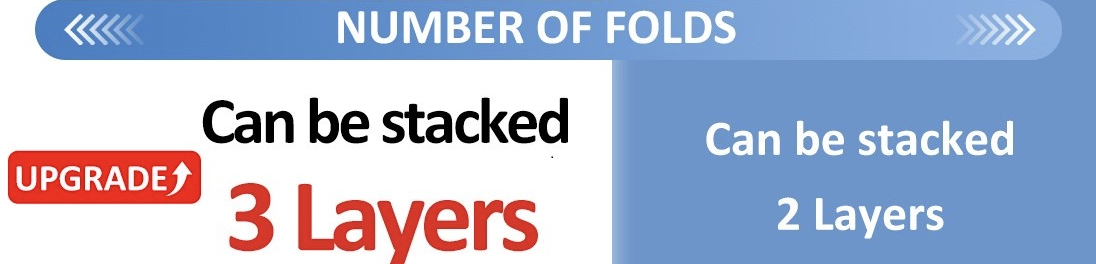
Optimiser l'utilisation du sol est crucial, notamment pour les projets en zones touristiques ou en milieu urbain où l'espace est précieux. La robustesse structurelle supérieure du Z-Type offre une plus grande flexibilité verticale. Conçu pour être empilé en toute sécurité jusqu'à trois étages, il permet de créer des logements, des immeubles de bureaux ou des chambres d'hôtel sur plusieurs niveaux, triplant ainsi la capacité de construction sans acquisition de terrain supplémentaire. Un atout majeur pour les promoteurs et les entreprises de construction souhaitant exploiter au maximum le potentiel de leurs sites. La maison pliable traditionnelle, avec sa structure tubulaire carrée plus ancienne et moins résistante, n'est pas suffisamment robuste pour supporter une telle hauteur. Elle est généralement limitée à deux niveaux, une restriction qui peut constituer un frein important pour les projets exigeant une forte densité. La possibilité de construire un étage supplémentaire avec le Z-Type ouvre un champ des possibles inédit.
Conclusion
Le modèle Z-Type représente une nette amélioration en termes de style, de performance et de durabilité, offrant une durée de vie plus longue et une plus grande flexibilité, ce qui en fait un investissement plus judicieux à long terme pour tout projet de construction modulaire.